
 Türkçe
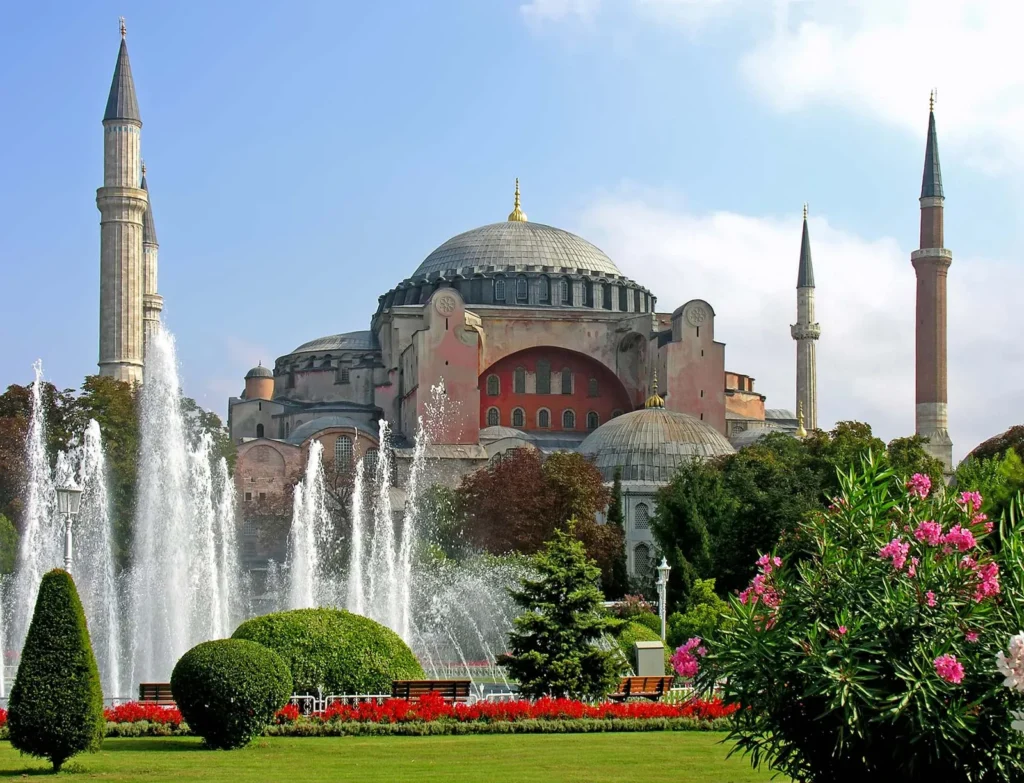
Hagia Sophia travel guide • Istanbul Historic Peninsula must-see • Things to do in Istanbul
Introduction
Welcome to Hagia Sophia, one of the world’s most iconic monuments! If you’re planning a trip to Istanbul’s Historic Peninsula, Hagia Sophia is an absolute must. This breathtaking building has witnessed empires rise and fall, religions transform, and generations pass through its massive doors. Let me be your guide to exploring this wonder, with practical tips and a little bit of history sprinkled in.
🌟 A 1500-Year History That Shaped the World
Originally built in 537 CE by the Byzantine Emperor Justinian I, Hagia Sophia was designed to be the greatest church on Earth. When it was completed, people were in awe of its massive dome—soaring over 55 meters high—and its shimmering mosaics. Imagine being a pilgrim over a thousand years ago, walking in and seeing the light filter through colored windows, making the gold mosaics glow.
After the Ottoman conquest of Constantinople in 1453, Sultan Mehmed II converted it into a mosque. Four elegant minarets were added, Islamic calligraphy panels hung on the walls, and new elements like the mihrab and minbar were introduced—all while preserving much of the Christian art.
In 1935, the Turkish Republic transformed Hagia Sophia into a museum, opening its doors to people of all faiths and backgrounds. In 2020, it became an active mosque again, while still welcoming tourists. It’s a living monument to Istanbul’s layered history.
🏛️ Architectural Marvel
Hagia Sophia’s design was revolutionary. The giant central dome seems to float above the nave, thanks to hidden supporting structures and an ingenious system of pendentives. It was one of the first buildings in history to achieve such a vast, open interior.
Inside, you’ll see massive marble pillars imported from ancient sites, richly colored mosaics of Christ and the Virgin Mary, and giant round wooden medallions inscribed with Islamic calligraphy. This beautiful blend of Byzantine and Ottoman styles is what makes Hagia Sophia so unique.
Don’t miss:
-
Imperial Gate – the grand entrance reserved for emperors
-
Deesis Mosaic – an emotional 13th-century depiction of Christ flanked by Mary and John the Baptist
-
Upper Gallery – for sweeping views of the interior and its mosaics
-
Mihrab and Minbar – Ottoman-era additions that tell the story of its mosque period
📸 Insider Travel Tips
✔️ When to visit? Early morning or late afternoon for fewer crowds.
✔️ Dress code: Modest clothing required; women should cover their heads inside as it is an active mosque.
✔️ Photography: Allowed but be respectful—no flash on mosaics, and avoid taking photos of worshippers.
✔️ Tickets: Entry is free since it functions as a mosque, but donations are welcome.
✔️ Accessibility: Some areas have steps, but much of the ground floor is accessible.
🌍 Why You Shouldn’t Miss It
Hagia Sophia isn’t just a building—it’s a bridge between civilizations. Walking through its doors feels like stepping into a living museum where empires, religions, and art traditions meet. Whether you’re a history lover, architecture buff, or just someone who loves beautiful places, this spot will stay with you long after you leave Istanbul.