
 Türkçe
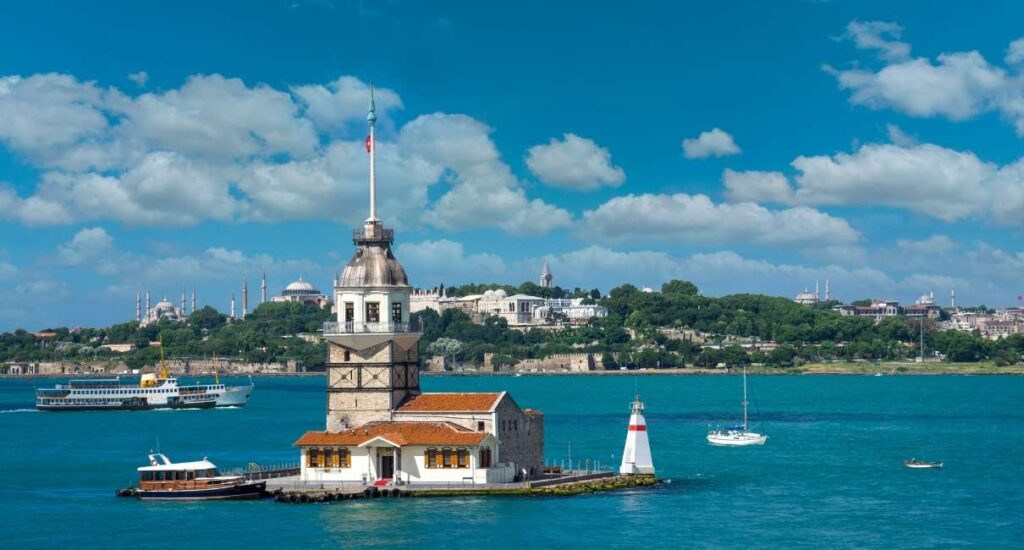
Maiden’s Tower Istanbul travel guide • Kız Kulesi history • Best things to do in Istanbul
Introduction
Few places capture the romance and mystery of Istanbul like Kız Kulesi—known in English as the Maiden’s Tower.
Standing alone on a tiny islet where the Bosphorus meets the Sea of Marmara, this graceful tower has watched over centuries of empires, trade, and legends.
It’s not just an Instagram-perfect spot with stunning views—it’s a place soaked in myth and history, with stories that have fascinated travelers for centuries. Let’s explore what makes the Maiden’s Tower an essential stop on your Istanbul adventure.
🌟 A Strategic Outpost Since Antiquity
The history of Kız Kulesi stretches back more than 2,000 years.
It is believed the first structures on this little island date to the 5th century BCE, when an Athenian general built a customs station to control shipping through the Bosphorus. Controlling this narrow strait meant controlling trade between the Black Sea and the Mediterranean—hugely important for ancient empires.
Over time, the Byzantines and Ottomans both understood the tower’s strategic value. The Byzantines built fortifications here in the 12th century, linking the tower to the Asian shore with a giant chain to block enemy ships.
During the Ottoman era, it served many roles:
-
Watchtower to spot fires in the city.
-
Lighthouse guiding ships safely.
-
Quarantine station during plagues.
-
Military post defending the strait.
Every stone of Kız Kulesi has a story to tell.
🏛️ A Tower of Legends
Beyond its military history, what really makes Kız Kulesi so famous are the legends.
The most famous is the Maiden’s Tower legend that gives it its name:
A sultan’s beloved daughter was prophesied to die from a snakebite. To protect her, he built this tower on the water. Despite his efforts, a snake hidden in a fruit basket bit her, fulfilling the prophecy.
It’s a story about fate, love, and loss—classic Istanbul themes.
There’s also the romantic Leandros legend (adapted from a Greek myth), about a priestess and a young man who swam to her by night, guided by the light of the tower. One stormy night, the light went out, he drowned, and she flung herself into the sea in grief.
These legends have inspired poets, painters, and filmmakers for centuries.
🌇 The View: Istanbul All Around You
Visiting Kız Kulesi isn’t just about the building—it’s about where it is.
Standing on this tiny island, you’re literally surrounded by Istanbul:
-
To the northeast: the Bosphorus Bridge and modern skyscrapers of the European side.
-
To the west: the historic silhouette of Topkapı Palace, Hagia Sophia, and the Blue Mosque.
-
To the east: the green hills of Üsküdar and Kadıköy.
-
To the south: the vast Sea of Marmara.
It’s a 360° panorama that perfectly sums up Istanbul’s geography—where continents and seas meet.
🧭 What to See and Do
Kız Kulesi has been carefully restored and is now open to visitors. Your visit typically includes:
-
Boat Ride: Small ferries leave from Üsküdar Salacak or Kabataş on the European side. The short ride itself is part of the fun!
-
Museum Displays: Learn about the tower’s history, architecture, and legends.
-
Observation Deck: Climb to the top for panoramic photos.
-
Restaurant and Café: Enjoy Turkish tea, coffee, or even a full meal with unforgettable views.
At night, the tower is beautifully illuminated, creating a magical sight from the shore.
📸 Insider Travel Tips
✔️ Best time to visit: Sunset for golden-hour photos and city lights turning on.
✔️ Tickets: Usually includes the boat ride; check online or at the pier for current prices.
✔️ Photography: Bring a wide-angle lens to capture the views.
✔️ Weather: Windy and cooler on the water—bring a light jacket even in summer.
✔️ Combine with: A walk along Üsküdar’s promenade or a ferry ride back to Europe at dusk.
❤️ Why You’ll Love It
Kız Kulesi is more than just a monument—it’s Istanbul in miniature. A place that’s seen empires come and go, a lighthouse of love and loss, a vantage point to see the city spread out in all its beauty.
Whether you’re drawn by the legends, the history, the architecture, or just the view, you’ll leave with your own story to tell.