
 Türkçe
Istanbul Archaeological Museums travel guide • Best museums in Istanbul • Historic Peninsula cultural highlights
Introduction
If you’re a history lover—or even just a curious traveler—there’s no better place in Istanbul to see the layers of world history up close than the Istanbul Archaeological Museums.
This sprawling museum complex is home to over a million artifacts spanning thousands of years. From ancient Mesopotamia to Classical Greece, from Pharaonic Egypt to the Byzantine Empire—it’s all here, beautifully displayed and ready to transport you through time.
🌟 A Brief History of the Museum
Founded in 1891 by the famous Ottoman painter and archaeologist Osman Hamdi Bey, the Istanbul Archaeological Museums were among the first modern museums in the world.
Osman Hamdi wasn’t just a bureaucrat—he was passionate about preserving Turkey’s heritage. He spearheaded excavations in places like Sidon (in modern-day Lebanon), bringing back incredible treasures that needed a proper home.
His vision was to create an institution that would showcase not just Ottoman history but the entire story of civilization in these lands. The result? A museum that rivals the great collections of London, Paris, and Berlin.
🏛️ The Three Main Sections
The “Istanbul Archaeological Museums” is actually three separate but connected museums, all within a short walk of each other in the grounds of Topkapı Palace.
1. The Archaeological Museum
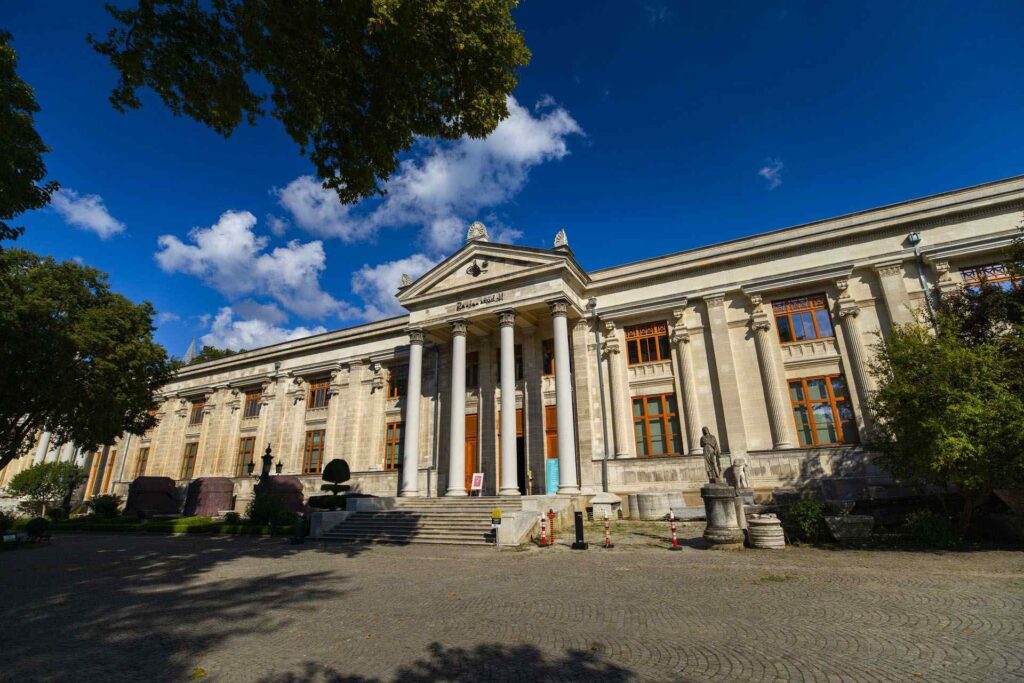
The main building is an imposing neoclassical structure with grand columns and elegant interiors. Inside, you’ll find:
-
The Alexander Sarcophagus: Despite its name, it wasn’t Alexander’s, but it’s one of the most beautiful pieces of ancient art ever discovered—carved with battle scenes in exquisite detail.
-
Sidon Necropolis Sarcophagi: Stunning marble tombs excavated by Osman Hamdi Bey himself.
-
Ancient Greek and Roman Statues: Gods, emperors, heroes—all life-sized, all magnificent.
-
Reliefs and Steles: From Mesopotamia to Anatolia.
Each gallery is like opening a different chapter of ancient history.
2. Museum of the Ancient Orient
Located just across the courtyard, this museum focuses on even older civilizations.
-
Cuneiform Tablets: Including parts of the famous Kadesh Peace Treaty—one of the world’s oldest known peace treaties.
-
Hittite Reliefs: Offering a glimpse into Turkey’s Bronze Age superpower.
-
Egyptian Artifacts: Including striking statues and sarcophagi.
-
Mesopotamian Seals and Art: Tiny but rich with detail.
It’s a reminder that Istanbul sits at the crossroads of all ancient civilizations.
3. Tiled Kiosk Museum (Çinili Köşk)
The oldest building in the complex, dating back to 1472. Commissioned by Sultan Mehmed II, it’s a gorgeous piece of early Ottoman architecture with a classic Persian-influenced tiled façade.
Inside? A treasure trove of Turkish and Islamic tiles and ceramics. You’ll see dazzling Iznik and Kütahya tiles that showcase the artistry of Ottoman craftsmen.
🧭 Why It’s Special
The Archaeological Museums aren’t just a collection of old things—they tell the story of the land we now call Turkey as the heart of human civilization.
You’ll see how empires rose and fell, how art and writing evolved, and how this region connected East and West for millennia. It’s humbling and awe-inspiring.
📸 Insider Travel Tips
✔️ Tickets: Often included in combo passes with Topkapı Palace—but check for updates.
✔️ Time needed: At least 2 hours (but history buffs will want half a day).
✔️ Opening hours: Typically 9 AM–5 PM, but confirm before visiting.
✔️ Photography: Allowed in most galleries, no flash.
✔️ Best time to visit: Early in the day to avoid crowds.
✔️ Combine with: Topkapı Palace or Gülhane Park—both right next door.
❤️ Why You’ll Love It
Wandering through the Istanbul Archaeological Museums is like time travel without leaving the city. One moment you’re staring into the eyes of a 2,500-year-old statue, the next you’re deciphering ancient cuneiform or admiring Ottoman tiles.
It’s proof of Istanbul’s role as a bridge—not just between continents, but between eras.
Whether you’re a dedicated history buff or just someone who wants to understand the city a little better, this museum is essential.