
 Türkçe
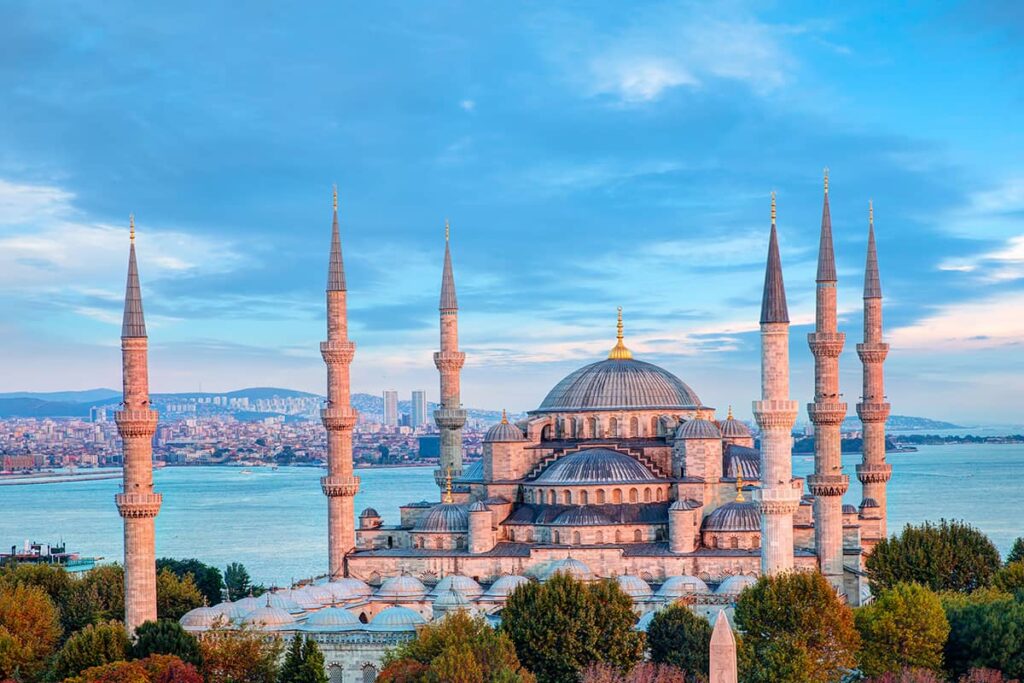
Blue Mosque travel guide • Istanbul Historic Peninsula highlights • Best things to do in Istanbul
Introduction
Standing proudly opposite Hagia Sophia, the Sultanahmet Mosque—better known as the Blue Mosque—is one of Istanbul’s most recognizable landmarks. This dazzling structure isn’t just a place of worship but a symbol of the Ottoman Empire’s artistic and architectural zenith.
If you’re visiting Istanbul’s Historic Peninsula, the Blue Mosque is an absolute must-see. Let’s explore its history, architectural wonders, and all the insider tips you’ll need to make the most of your visit.
🌟 A Glorious History
Commissioned by Sultan Ahmed I, the mosque was built between 1609 and 1616, at the peak of the Ottoman Empire’s power. Sultan Ahmed wanted to rival Hagia Sophia’s grandeur and leave behind a legacy.
The mosque’s architect, Sedefkâr Mehmed Ağa—a student of the great Mimar Sinan—rose to the challenge with a design that fused classical Ottoman style with Byzantine influences from Hagia Sophia itself.
But this wasn’t just about beauty: the construction of such a grand mosque so close to Hagia Sophia was a clear statement of power, faith, and cultural confidence. Even today, these two giants of the Istanbul skyline seem to watch each other in an eternal dialogue.
🏛️ Stunning Architecture and the Famous Blue Tiles
Why is it called the Blue Mosque? Step inside and you’ll know instantly. Over 20,000 hand-painted İznik tiles in blue, green, and white adorn its interior, forming intricate floral and geometric patterns. When sunlight streams through over 200 stained-glass windows, the entire space glows with a mystical blue hue.
Key features:
-
Six Minarets: A bold choice, as no other mosque in Istanbul had so many at the time. Legend says Sultan Ahmed had to send money to Mecca to add a seventh minaret there, so his mosque wouldn’t equal the Grand Mosque of Mecca!
-
Giant Dome: 23.5 meters in diameter, supported by four colossal “elephant foot” pillars.
-
Spacious Courtyard: One of the largest of any Ottoman mosque, with an elegant ablution fountain at its center.
-
Calligraphy and Decorations: Exquisite Ottoman calligraphy featuring Quranic verses lines the walls.
You’ll also notice the harmonious symmetry of its design, the grandeur of its central dome surrounded by semi-domes, and the way every element leads the eye naturally toward the mihrab.
🙌 A Living Place of Worship
Unlike a museum, the Blue Mosque remains an active house of prayer. Five times a day, the call to prayer rings out from its six minarets—an unmissable part of the Istanbul soundscape.
Visitors are welcome outside of prayer times. It’s a beautiful way to experience local culture while respecting the building’s primary role. You’ll often see locals coming in to pray while tourists quietly admire the art and architecture.
📸 Insider Travel Tips
✔️ When to visit? Early morning or late evening to avoid the busiest crowds.
✔️ Dress code: Modest attire is required. Women should cover their hair; scarves are usually provided at the entrance. Men should avoid shorts.
✔️ Prayer times: The mosque closes to tourists during prayers—check times in advance.
✔️ Entry fee: Free, though donations are appreciated to support upkeep.
✔️ Photography: Allowed, but turn off flash and be respectful of worshippers.
❤️ Why You’ll Love It
The Blue Mosque isn’t just about tiles and domes. It’s about standing in a space that is alive with faith and history. It’s about feeling the cool stone beneath your feet, hearing the soft murmur of prayers, and watching sunlight transform the colors overhead.
This is the Istanbul of postcards and dreams—living history you can walk right into.