
 Türkçe
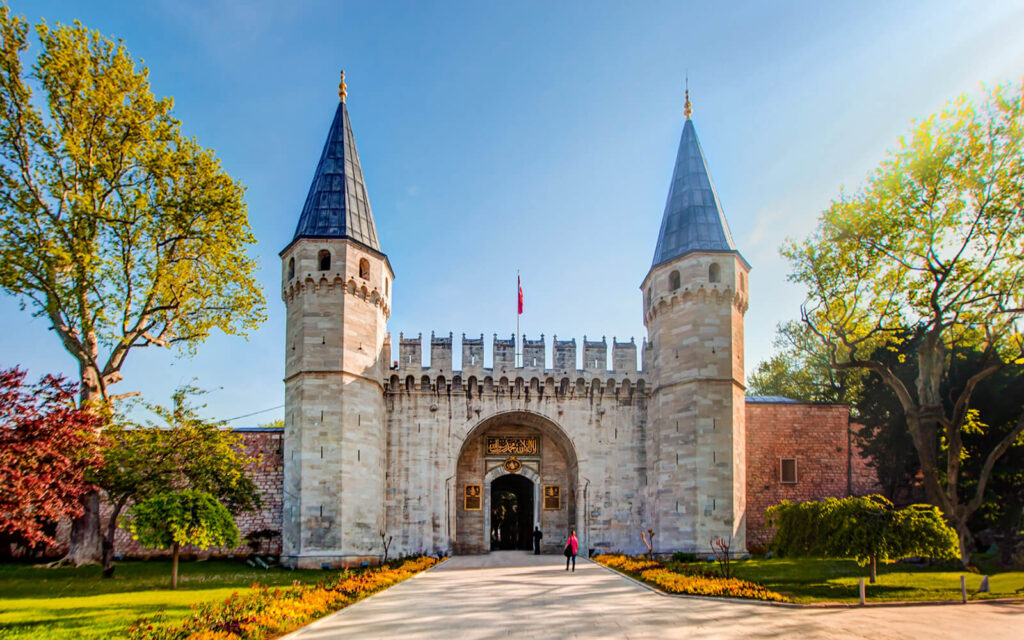
Topkapi Palace travel guide • Best things to see in Istanbul • Historic Peninsula must-visit
Introduction
If you want to truly understand the grandeur of the Ottoman Empire, there’s no better place than Topkapı Palace. Imagine sultans strategizing over maps, the glitter of royal jewels, the hush of secretive courtyards, and a breathtaking view of two continents from its terraces.
Topkapı isn’t just a palace—it’s an entire world behind walls. Let’s dive into its layered history, must-see highlights, and everything you need to know for your visit.
🌟 A Palace Built for Empire
After the Ottoman conquest of Constantinople in 1453, Sultan Mehmed II (Mehmed the Conqueror) ordered the construction of this palace on the Seraglio Point, a prime location with sweeping views of the Bosphorus, Golden Horn, and Marmara Sea.
Built between the 1460s and the late 15th century, Topkapı served as the administrative and residential heart of the Ottoman Empire for nearly 400 years. Here, decisions that shaped continents were made.
Unlike European palaces with grand symmetrical facades, Topkapı is more like a sprawling city of pavilions, gardens, and courtyards. Each section was added over centuries, reflecting changing tastes and imperial power.
🏛️ Architectural Highlights
Topkapı Palace is divided into four main courtyards, each with its own character and purpose. Let’s walk through them:
-
First Courtyard (Alay Meydanı): Open to the public during Ottoman times. It houses Hagia Irene, one of the oldest churches in Istanbul.
-
Second Courtyard: The heart of official life. Here you’ll find the Imperial Council Chamber (Divan), the palace kitchens (once serving up to 5,000 people daily!), and beautiful gardens shaded by plane trees.
-
Third Courtyard: The sultan’s private domain. Don’t miss the Audience Chamber, where ambassadors once bowed before the sultan, and the Imperial Treasury, home to the dazzling Kaşıkçı Diamond, Topkapı Dagger, and other legendary jewels.
-
Fourth Courtyard: A serene set of terraced gardens and kiosks with panoramic Bosphorus views. The Baghdad Kiosk and Circumcision Room here are beautiful examples of Ottoman decorative arts.
👑 The Harem: Secrets Behind Closed Doors
No visit to Topkapı Palace is complete without exploring the Harem. This private section housed the sultan’s family, concubines, and eunuchs who guarded them.
Designed like a labyrinth of more than 300 rooms, it features intricately tiled chambers, luxurious baths, and stunning courtyards. The Queen Mother’s apartments (Valide Sultan) are especially opulent, reflecting her power as the second-most influential person in the empire.
It’s easy to get lost in the romance and mystery of the Harem’s history—imagine whispers in candlelit halls, the politics of palace intrigue, and the lives of women who held enormous unseen power.
✨ Sacred Relics and Imperial Treasures
Topkapı is home to some of the Islamic world’s most important relics, displayed in the Chamber of Holy Relics. Among them:
-
The Prophet Muhammad’s cloak and sword
-
Sacred relics of other prophets
-
Caliphal seals and letters
These items are venerated by Muslim visitors and offer a spiritual dimension to the palace’s otherwise worldly opulence.
Meanwhile, the Imperial Treasury dazzles with gold, emeralds, diamonds, and works of art that remind you of the empire’s reach and wealth.
📸 Insider Travel Tips
✔️ Tickets: The Harem requires a separate ticket from the main palace. It’s worth every lira.
✔️ Opening hours: Closed on Tuesdays—plan accordingly.
✔️ Time needed: At least 3–4 hours to do it justice.
✔️ Crowds: Arrive early or buy tickets online to skip lines.
✔️ Photography: Allowed in most areas but restricted in some (check signs).
✔️ Dress comfortably: There’s a lot of walking and some uneven old paving stones.
❤️ Why You’ll Love It
Topkapı Palace isn’t a dusty museum—it’s a living, breathing storybook. Every courtyard and chamber has tales of sultans and viziers, intrigue and ceremony. And those Bosphorus views? They alone are worth the visit.
Wandering here, you can truly imagine the pomp and politics of an empire that ruled much of the known world.