Kız Kulesi (Maiden’s Tower): Istanbul’s Legendary Island Sentinel

Maiden’s Tower Istanbul travel guide • Kız Kulesi history • Best things to do in Istanbul


Introduction
Few places capture the romance and mystery of Istanbul like Kız Kulesi—known in English as the Maiden’s Tower.

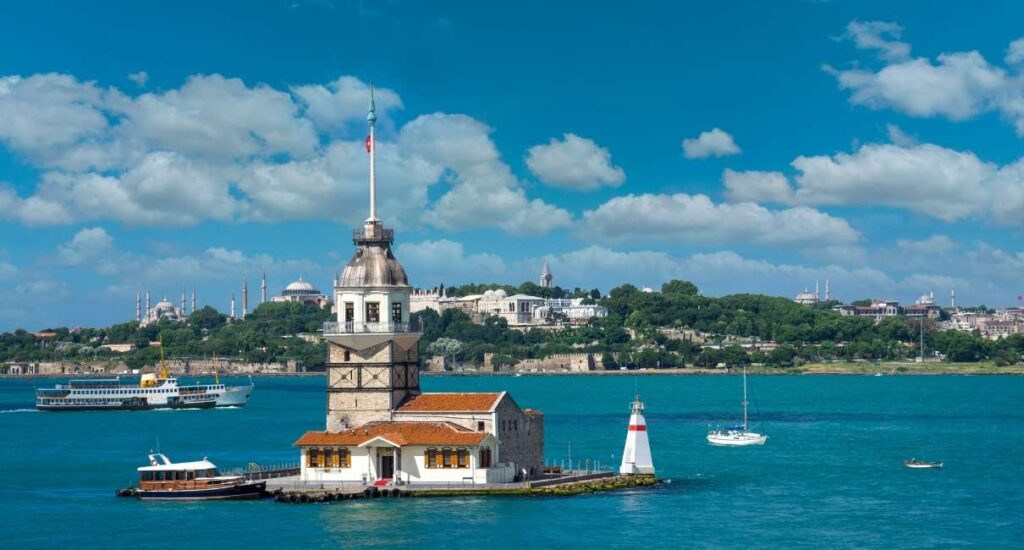
Standing alone on a tiny islet where the Bosphorus meets the Sea of Marmara, this graceful tower has watched over centuries of empires, trade, and legends.

It’s not just an Instagram-perfect spot with stunning views—it’s a place soaked in myth and history, with stories that have fascinated travelers for centuries. Let’s explore what makes the Maiden’s Tower an essential stop on your Istanbul adventure.


🌟 A Strategic Outpost Since Antiquity

The history of Kız Kulesi stretches back more than 2,000 years.

It is believed the first structures on this little island date to the 5th century BCE, when an Athenian general built a customs station to control shipping through the Bosphorus. Controlling this narrow strait meant controlling trade between the Black Sea and the Mediterranean—hugely important for ancient empires.

Over time, the Byzantines and Ottomans both understood the tower’s strategic value. The Byzantines built fortifications here in the 12th century, linking the tower to the Asian shore with a giant chain to block enemy ships.

During the Ottoman era, it served many roles:

  • Watchtower to spot fires in the city.

  • Lighthouse guiding ships safely.

  • Quarantine station during plagues.

  • Military post defending the strait.

Every stone of Kız Kulesi has a story to tell.


🏛️ A Tower of Legends

Beyond its military history, what really makes Kız Kulesi so famous are the legends.

The most famous is the Maiden’s Tower legend that gives it its name:

A sultan’s beloved daughter was prophesied to die from a snakebite. To protect her, he built this tower on the water. Despite his efforts, a snake hidden in a fruit basket bit her, fulfilling the prophecy.

It’s a story about fate, love, and loss—classic Istanbul themes.

There’s also the romantic Leandros legend (adapted from a Greek myth), about a priestess and a young man who swam to her by night, guided by the light of the tower. One stormy night, the light went out, he drowned, and she flung herself into the sea in grief.

These legends have inspired poets, painters, and filmmakers for centuries.


🌇 The View: Istanbul All Around You

Visiting Kız Kulesi isn’t just about the building—it’s about where it is.

Standing on this tiny island, you’re literally surrounded by Istanbul:

  • To the northeast: the Bosphorus Bridge and modern skyscrapers of the European side.

  • To the west: the historic silhouette of Topkapı Palace, Hagia Sophia, and the Blue Mosque.

  • To the east: the green hills of Üsküdar and Kadıköy.

  • To the south: the vast Sea of Marmara.

It’s a 360° panorama that perfectly sums up Istanbul’s geography—where continents and seas meet.


🧭 What to See and Do

Kız Kulesi has been carefully restored and is now open to visitors. Your visit typically includes:

  • Boat Ride: Small ferries leave from Üsküdar Salacak or Kabataş on the European side. The short ride itself is part of the fun!

  • Museum Displays: Learn about the tower’s history, architecture, and legends.

  • Observation Deck: Climb to the top for panoramic photos.

  • Restaurant and Café: Enjoy Turkish tea, coffee, or even a full meal with unforgettable views.

At night, the tower is beautifully illuminated, creating a magical sight from the shore.


📸 Insider Travel Tips

✔️ Best time to visit: Sunset for golden-hour photos and city lights turning on.
✔️ Tickets: Usually includes the boat ride; check online or at the pier for current prices.
✔️ Photography: Bring a wide-angle lens to capture the views.
✔️ Weather: Windy and cooler on the water—bring a light jacket even in summer.
✔️ Combine with: A walk along Üsküdar’s promenade or a ferry ride back to Europe at dusk.


❤️ Why You’ll Love It

Kız Kulesi is more than just a monument—it’s Istanbul in miniature. A place that’s seen empires come and go, a lighthouse of love and loss, a vantage point to see the city spread out in all its beauty.

Whether you’re drawn by the legends, the history, the architecture, or just the view, you’ll leave with your own story to tell.

Galata Tower: Istanbul’s Timeless Watchtower with a View

Galata Tower Istanbul travel guide • Best viewpoints in Istanbul • Things to do in Beyoğlu


Introduction
If you’ve ever seen a postcard of Istanbul with that iconic medieval tower rising above a sea of red rooftops, you already know Galata Tower.

Perched on a hill in the lively Beyoğlu district, Galata Tower isn’t just a historic landmark—it’s one of the best places to take in Istanbul’s breathtaking skyline. From its panoramic terrace you’ll see minarets, palaces, bridges, and the glittering Bosphorus all at once.

Let’s dive into its fascinating history, what to see and do, and why it’s a must on your Istanbul itinerary.


🏛️ A Tower with Centuries of Stories

Galata Tower’s history dates back to the 14th century. Built in 1348 by the Genoese—Italian merchants who controlled the Galata neighborhood at the time—it was originally called Christea Turris (Tower of Christ).

It served as part of the defensive walls surrounding the Genoese colony, designed to protect the thriving port trade of medieval Constantinople. The thick stone walls, conical roof, and Romanesque architecture reflect European medieval styles rare elsewhere in Istanbul.

When the Ottomans conquered Constantinople in 1453, they incorporated the tower into their city. Over the centuries it served many roles:

  • Watchtower to spot fires in the city.

  • Prison for war captives.

  • Naval signaling post during the Ottoman era.

It’s a survivor—restored after fires, earthquakes, and wars, each layer of history adding character.


🌟 The Legend of Hezarfen Ahmet Çelebi

No Galata Tower story is complete without Istanbul’s favorite legend.

In the 17th century, the Ottoman polymath Hezarfen Ahmet Çelebi is said to have strapped on homemade wings, jumped from Galata Tower, and glided over the Bosphorus to Üsküdar on the Asian side.

Whether it’s true or not, it symbolizes the city’s spirit—ambitious, bold, always reaching across boundaries. Today, the tower proudly celebrates Hezarfen’s feat with statues and plaques.


🔭 The View: Istanbul at Your Feet

Let’s be honest—the main reason everyone comes here is for that view.

Climb to the 360° observation deck (or take the elevator most of the way), and you’ll see:

  • The Historic Peninsula: Hagia Sophia, Blue Mosque, Topkapı Palace.

  • The Golden Horn curving like a natural moat around old Istanbul.

  • The Bosphorus Strait stretching to the Black Sea.

  • The Asian side of the city.

  • Modern skyscrapers of the European business districts.

Sunrise and sunset are especially magical, when the city is bathed in warm golden light and the minarets silhouette against the sky.


🧭 What to Expect Inside

After restoration in recent years, Galata Tower offers a well-organized visitor experience:

  • Exhibits: Learn about the tower’s history with displays in multiple languages.

  • Interactive Features: Some floors have models or multimedia presentations.

  • Observation Deck: The star attraction, with safety railings and space to walk all the way around.

  • Café: Grab a tea or Turkish coffee while taking in the view.

Expect lines during peak hours, especially on weekends. Early mornings or late evenings are quieter.


📸 Insider Travel Tips

✔️ Tickets: Entry is paid. Buy online or at the door (card accepted). Prices vary for tourists and locals.
✔️ Best time to visit: Early morning or at sunset for photography.
✔️ Accessibility: Elevator goes most of the way, but there are still stairs to climb.
✔️ Photography: Wide-angle lenses recommended for the cityscape!
✔️ Nearby: Explore Galata’s artsy shops, cafes, and cobbled streets.
✔️ Combine with: Walking down to Karaköy or strolling up to Istiklal Avenue.


❤️ Why You’ll Love It

Galata Tower isn’t just a viewpoint—it’s a symbol of Istanbul itself. A watchtower that’s seen empires rise and fall, fires rage, and bridges built.

Standing atop it, with the Bosphorus glittering below and the call to prayer floating on the breeze, you understand Istanbul’s magic in one sweeping view.

It’s where the city’s layers come into focus—old and new, East and West, Europe and Asia, all at once.

Fener and Balat: Istanbul’s Colorful Historic Neighborhoods

Fener and Balat Istanbul travel guide • Best neighborhoods in Istanbul • Historic Peninsula hidden gems


Introduction
If you want to see Istanbul at its most authentic, diverse, and photogenic, head to Fener and Balat. These neighboring districts along the Golden Horn are a riot of color, history, and culture.

Wander narrow cobblestone streets lined with centuries-old houses painted in bright hues, discover historic churches and synagogues, sip coffee at hipster cafes in restored Ottoman mansions. Fener and Balat feel like time capsules—and yet they’re buzzing with life.

This is Istanbul off the postcard path, but every bit as magical.


🌟 A Melting Pot of Faiths and Cultures

Fener and Balat have long been among the city’s most cosmopolitan neighborhoods.

  • Fener was the historic Greek Orthodox quarter, home to wealthy Greek families, merchants, and clergy.

  • Balat was traditionally home to a large Jewish community, with synagogues and Jewish schools alongside Armenian and Greek residents.

This mix created a rich urban fabric where churches, synagogues, and mosques stood side by side—often literally on the same street.

Though the demographics have changed over the past century (with many minority residents leaving due to political upheavals), the cultural traces remain everywhere in the architecture and street names.


🏛️ Historic Highlights

There’s so much to see here beyond the colorful houses:

📍 Ecumenical Patriarchate of Constantinople

The spiritual center of the world’s Orthodox Christians. The humble but historic Church of St. George here contains priceless relics and icons. It’s a pilgrimage site for Orthodox visitors from around the world.

📍 Phanar Greek Orthodox College

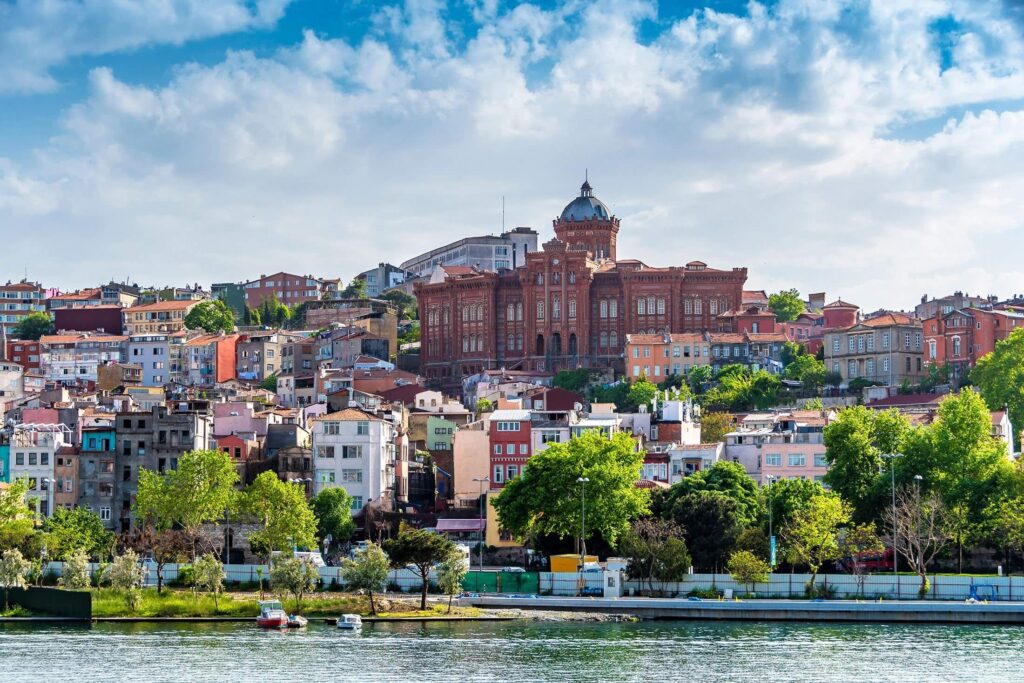
A towering red-brick landmark nicknamed “The Red Castle” by locals. Built in the 19th century, its dramatic neo-classical style looms over the neighborhood and makes for spectacular photos.

📍 Churches, Synagogues, and Mosques

  • Church of St. Mary of the Mongols: The only Greek Orthodox church in Istanbul never converted to a mosque.

  • Ahrida Synagogue: One of Istanbul’s oldest, dating to the 1400s, with a unique boat-shaped bimah.

  • Ferruh Kethuda Mosque: A lovely example of Ottoman simplicity, designed by Mimar Sinan himself.


🧭 Streets Made for Wandering

Beyond its landmarks, Fener and Balat are best explored slowly, on foot.

  • Colorful Wooden Houses: Restored Ottoman-era homes in vibrant reds, blues, and yellows—perfect for photographers.

  • Steep Cobblestone Streets: Winding lanes reveal new surprises at every turn.

  • Cafes and Antique Shops: Trendy spots set in centuries-old buildings, mixing old and new in that classic Istanbul way.

  • Street Art and Murals: Modern touches that add character and energy.

It’s the kind of place where you might plan to “just have a look” and end up staying for hours.


📸 Insider Travel Tips

✔️ Best time to visit: Early morning for quiet photos; late afternoon for golden light.
✔️ Getting there: Easy taxi ride or a scenic Golden Horn ferry.
✔️ Footwear: Comfortable shoes! Streets are steep and cobbled.
✔️ Photography: Go wild—this is one of the most Instagram-friendly areas of Istanbul.
✔️ Respect locals: Remember many houses are private homes; always be courteous.
✔️ Combine with: A Golden Horn ferry ride or a walk along the water.


❤️ The New Life of Old Neighborhoods

In recent years, Fener and Balat have seen a revival. Artists, designers, and young entrepreneurs have opened galleries, cafes, and boutique hotels in old mansions. But despite this gentrification, the neighborhoods retain an authentic, lived-in feel.

You’ll see kids playing soccer in the street, laundry hanging between buildings, old men gossiping over tea, and cats absolutely everywhere.

It’s Istanbul at its warmest and most human—a place where history isn’t behind glass in a museum but lived in every day.

Beyazıt Square and Beyazıt Mosque: A Classic Ottoman Heartbeat

Beyazıt Square Istanbul travel guide • Beyazıt Mosque highlights • Things to do in Istanbul Historic Peninsula


Introduction
Step away from the packed lanes of the Grand Bazaar, and you’ll find yourself in one of Istanbul’s most historic yet often overlooked public spaces: Beyazıt Square.

At its center stands the grand Beyazıt Mosque, a classic example of early Ottoman architecture that has watched the city change for over 500 years. This square has been a stage for imperial ceremonies, scholarly pursuits, political protests, and the simple daily life of Istanbulites for centuries. Let’s explore why it’s worth a stop on your Historic Peninsula adventure.


🌟 A Square Steeped in History

Beyazıt Square has been a public space since Byzantine times. Back then it was part of the Forum of Theodosius, a bustling civic center in Constantinople.

After the Ottoman conquest in 1453, the square was reimagined as an imperial space, anchored by the mosque built by Sultan Bayezid II. Over time, it evolved into one of the most important squares of Ottoman and modern Istanbul alike.

It has seen:

  • Ceremonial processions of sultans.

  • Scholars debating in madrasa courtyards.

  • The ebb and flow of trade from the Grand Bazaar.

  • Political rallies and protests in the modern era.

In many ways, it’s a microcosm of Istanbul itself—layered, lively, and always evolving.


🕌 Beyazıt Mosque: Early Ottoman Elegance

Commissioned by Sultan Bayezid II, son of Mehmed the Conqueror, construction of the mosque began in 1501 and finished in 1506.

It’s one of the earliest examples of a large imperial Ottoman mosque in Istanbul and offers a fascinating bridge between the simpler early Ottoman style and the grander, Sinan-influenced designs that came later.

Architectural highlights include:

  • Central Dome: Supported by semi-domes in a design inspired by Hagia Sophia.

  • Elegant Courtyard: Framed by arcaded porticoes and a graceful şadırvan (ablution fountain) at its center.

  • Classic Minarets: Slim, tall, and beautifully ornamented.

  • Interior: Simpler than later Ottoman mosques but no less dignified, with restrained tilework and calligraphy.

Unlike the tourist-packed Blue Mosque, Beyazıt Mosque often feels quieter and more intimate—a perfect place to pause and reflect.


🏛️ The Surrounding Complex

As with many Ottoman mosques, Beyazıt wasn’t just for prayer. It was the heart of a külliye—a multi-functional social complex designed to serve the community.

Historically, the complex included:

  • Madrasas (Islamic schools): Nurturing generations of scholars.

  • Imaret (Soup kitchen): Feeding the poor and travelers.

  • Caravanserais and Shops: Generating income for the mosque’s upkeep.

Much of this fabric is still visible in the area, particularly in the tightly woven streets around the Grand Bazaar and Sahaflar Çarşısı (Secondhand Book Bazaar).


📚 Istanbul University: The Square’s Grand Gate

Perhaps the most striking feature of Beyazıt Square today is the monumental entrance gate of Istanbul University, located on the north side of the plaza.

This grand 19th-century structure with its Ottoman neo-classical design is instantly recognizable. The university itself has a deep history—its origins go back to the Ottoman medrese system and it’s considered the oldest higher education institution in Turkey.

Watching students come and go here is a reminder that Beyazıt has always been a center of learning and debate.


🧭 Vibrant Daily Life

Beyazıt Square isn’t a museum—it’s a living city space. You’ll see:

  • Students rushing to lectures.

  • Elderly men feeding pigeons.

  • Vendors selling simit (sesame bread rings) or roasted chestnuts.

  • Travelers pausing before plunging into the maze of the Grand Bazaar.

It’s the kind of place where you can just sit on a bench, people-watch, and let the atmosphere soak in.


📸 Insider Travel Tips

✔️ Best time to visit: Mornings or late afternoons for softer light and fewer crowds.
✔️ Combine with: Grand Bazaar (just steps away!), Sahaflar Çarşısı for old books.
✔️ Accessibility: Mostly flat, but watch for uneven cobbles.
✔️ Photography: Don’t miss shots of the mosque courtyard and the grand university gate.
✔️ Quiet time: The mosque is less crowded than other major sites—ideal for contemplation.


❤️ Why You’ll Love It

Beyazıt Square and its mosque aren’t as showy as Sultanahmet or Süleymaniye—but that’s exactly their charm. This is Istanbul in its everyday clothes: layered with history but full of life.

You’re standing where Byzantine emperors paraded, Ottoman sultans prayed, students argued philosophy, and modern Istanbulites still gather. It’s a place that feels real, lived-in, and wonderfully authentic.

Istanbul Archaeological Museums: A Treasure Trove of Civilizations

Istanbul Archaeological Museums travel guide • Best museums in Istanbul • Historic Peninsula cultural highlights


Introduction
If you’re a history lover—or even just a curious traveler—there’s no better place in Istanbul to see the layers of world history up close than the Istanbul Archaeological Museums.

This sprawling museum complex is home to over a million artifacts spanning thousands of years. From ancient Mesopotamia to Classical Greece, from Pharaonic Egypt to the Byzantine Empire—it’s all here, beautifully displayed and ready to transport you through time.


🌟 A Brief History of the Museum

Founded in 1891 by the famous Ottoman painter and archaeologist Osman Hamdi Bey, the Istanbul Archaeological Museums were among the first modern museums in the world.

Osman Hamdi wasn’t just a bureaucrat—he was passionate about preserving Turkey’s heritage. He spearheaded excavations in places like Sidon (in modern-day Lebanon), bringing back incredible treasures that needed a proper home.

His vision was to create an institution that would showcase not just Ottoman history but the entire story of civilization in these lands. The result? A museum that rivals the great collections of London, Paris, and Berlin.


🏛️ The Three Main Sections

The “Istanbul Archaeological Museums” is actually three separate but connected museums, all within a short walk of each other in the grounds of Topkapı Palace.


1. The Archaeological Museum

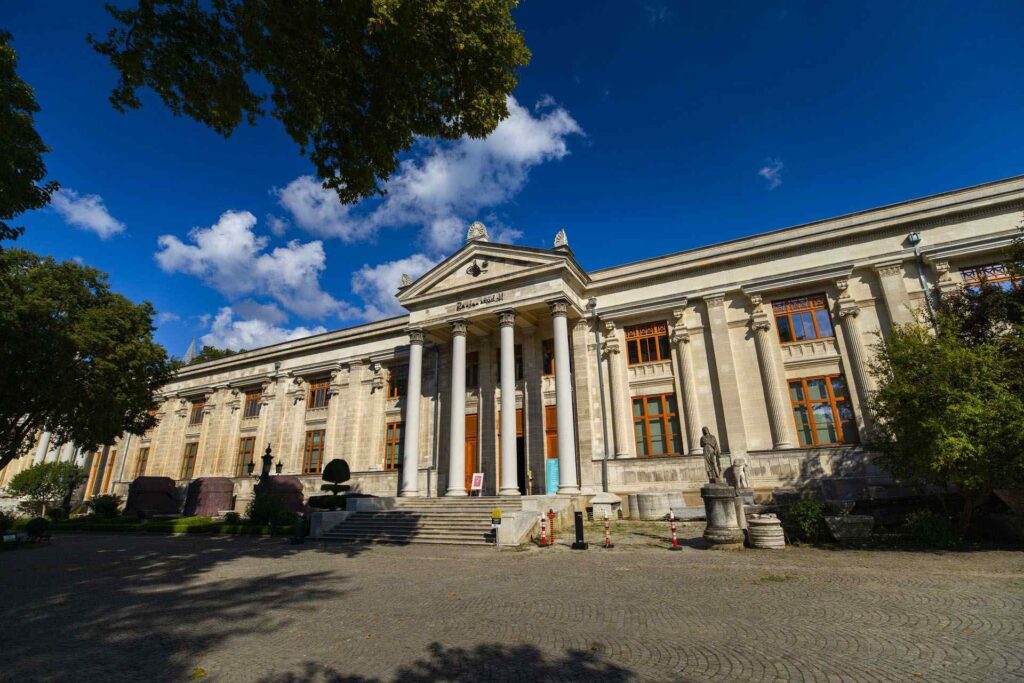
The main building is an imposing neoclassical structure with grand columns and elegant interiors. Inside, you’ll find:

  • The Alexander Sarcophagus: Despite its name, it wasn’t Alexander’s, but it’s one of the most beautiful pieces of ancient art ever discovered—carved with battle scenes in exquisite detail.

  • Sidon Necropolis Sarcophagi: Stunning marble tombs excavated by Osman Hamdi Bey himself.

  • Ancient Greek and Roman Statues: Gods, emperors, heroes—all life-sized, all magnificent.

  • Reliefs and Steles: From Mesopotamia to Anatolia.

Each gallery is like opening a different chapter of ancient history.


2. Museum of the Ancient Orient

Located just across the courtyard, this museum focuses on even older civilizations.

  • Cuneiform Tablets: Including parts of the famous Kadesh Peace Treaty—one of the world’s oldest known peace treaties.

  • Hittite Reliefs: Offering a glimpse into Turkey’s Bronze Age superpower.

  • Egyptian Artifacts: Including striking statues and sarcophagi.

  • Mesopotamian Seals and Art: Tiny but rich with detail.

It’s a reminder that Istanbul sits at the crossroads of all ancient civilizations.


3. Tiled Kiosk Museum (Çinili Köşk)

The oldest building in the complex, dating back to 1472. Commissioned by Sultan Mehmed II, it’s a gorgeous piece of early Ottoman architecture with a classic Persian-influenced tiled façade.

Inside? A treasure trove of Turkish and Islamic tiles and ceramics. You’ll see dazzling Iznik and Kütahya tiles that showcase the artistry of Ottoman craftsmen.


🧭 Why It’s Special

The Archaeological Museums aren’t just a collection of old things—they tell the story of the land we now call Turkey as the heart of human civilization.

You’ll see how empires rose and fell, how art and writing evolved, and how this region connected East and West for millennia. It’s humbling and awe-inspiring.


📸 Insider Travel Tips

✔️ Tickets: Often included in combo passes with Topkapı Palace—but check for updates.
✔️ Time needed: At least 2 hours (but history buffs will want half a day).
✔️ Opening hours: Typically 9 AM–5 PM, but confirm before visiting.
✔️ Photography: Allowed in most galleries, no flash.
✔️ Best time to visit: Early in the day to avoid crowds.
✔️ Combine with: Topkapı Palace or Gülhane Park—both right next door.


❤️ Why You’ll Love It

Wandering through the Istanbul Archaeological Museums is like time travel without leaving the city. One moment you’re staring into the eyes of a 2,500-year-old statue, the next you’re deciphering ancient cuneiform or admiring Ottoman tiles.

It’s proof of Istanbul’s role as a bridge—not just between continents, but between eras.

Whether you’re a dedicated history buff or just someone who wants to understand the city a little better, this museum is essential.

Gülhane Park: Istanbul’s Historic Green Escape

Gülhane Park Istanbul travel guide • Best parks in Istanbul • Things to do in the Historic Peninsula


Introduction
After exploring the grand mosques and bustling bazaars of Istanbul’s Historic Peninsula, there’s nothing like a peaceful walk among old trees and singing birds. Welcome to Gülhane Park—a green oasis with centuries of history, nestled right next to Topkapı Palace.

“Gülhane” means “House of Roses,” and while roses still bloom here, it’s the layers of empire, reform, and daily life that make it such a special place to visit.


🌟 A Royal Garden Turned Public Park

For much of its history, Gülhane was the private garden of the Ottoman sultans. It formed the outer grounds of Topkapı Palace, used for leisure walks, royal picnics, and courtly events. Imagine sultans and viziers strolling under these ancient plane trees, discussing politics, poetry, or war plans.

But Gülhane Park is also where history literally changed. In 1839, Sultan Abdülmecid announced the Tanzimat Edict(Gülhane Hatt-ı Hümayunu) here. This edict was a sweeping reform that aimed to modernize the Ottoman Empire, guaranteeing rights and equality to all citizens.

In 1912, the park was opened to the public—becoming Istanbul’s first modern municipal park. Since then, generations of locals have used it for family outings, romantic walks, and simply escaping the city’s chaos.


🏛️ What to See and Do in Gülhane Park

Today’s Gülhane Park has been beautifully restored, balancing its historic character with modern amenities. Here’s what you’ll find as you wander:

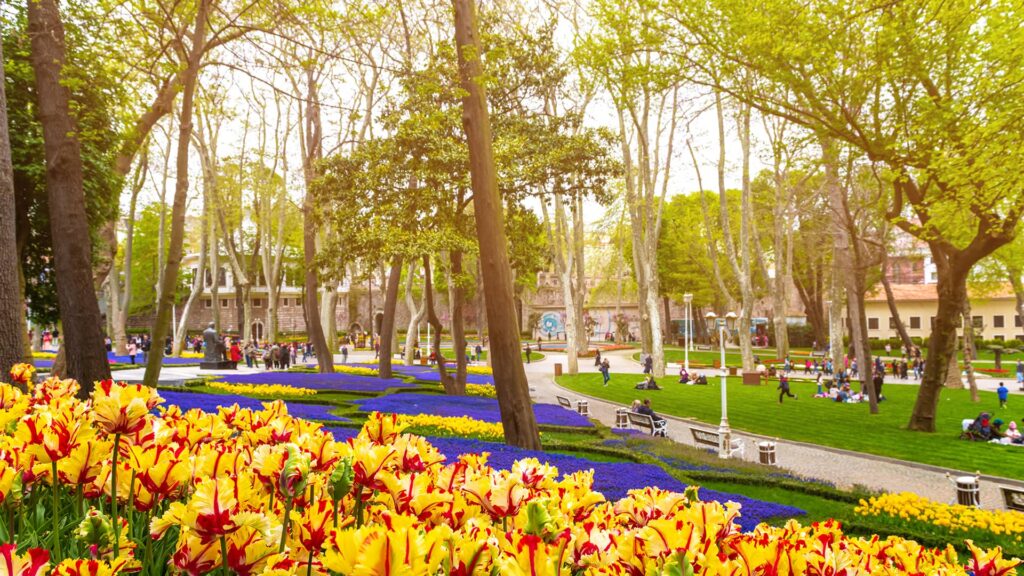
  • Long Tree-Lined Paths: Perfect for strolling, jogging, or people-watching.

  • Rose Gardens: Especially stunning in late spring.

  • Centuries-Old Plane Trees: Some trees here are over 100 years old, providing deep shade in summer.

  • Ponds and Fountains: Add a calming soundtrack to your walk.

  • Scenic Terraces: Offering spectacular views over the Bosphorus and the Sea of Marmara.

  • Cafes and Tea Gardens: Where you can sit for hours, sipping çay and watching the world go by.

The atmosphere is local and relaxed—kids playing, elderly friends chatting on benches, couples holding hands.


🧭 Museums Inside the Park

Gülhane Park isn’t just green space—it also houses important cultural sites:

  • Museum of the History of Science and Technology in Islam: Located in the old Imperial Stables, this museum showcases fascinating models of inventions by Muslim scientists—from astrolabes to water clocks. It’s both educational and beautifully curated.

  • Alay Köşkü (Parade Pavilion): This small kiosk near the main entrance was once used by sultans to watch parades on the street below. It’s a classic Ottoman pavilion with elegant details.

You can combine your park stroll with a bit of learning—without even leaving the grounds.


🌇 A Park with a View

One of Gülhane’s best features is its location. From the lower end of the park, you can access terraces with sweeping views over the Bosphorus.

It’s a favorite spot for photographers, sketch artists, and anyone who wants to just sit and let the city unfold in front of them. At sunset, the light over the water is simply magical.


📸 Insider Travel Tips

✔️ Best time to visit: Spring for the roses, autumn for crisp air and color.
✔️ Entrance fee: Free! It’s a public park.
✔️ Opening hours: Typically dawn to dusk.
✔️ Accessibility: Mostly flat and paved; benches everywhere for resting.
✔️ Food and drink: Grab tea or a cold drink at park cafés—reasonably priced and scenic.
✔️ Nearby: Topkapı Palace’s main gates are right at the park’s edge. Combine your palace visit with a relaxing stroll.


❤️ Why You’ll Love It

Gülhane Park is where Istanbul breathes. It’s where centuries of imperial history meet the rhythms of daily life.

One moment you’re gazing at Topkapı’s ancient walls, the next you’re sitting under a massive plane tree that has seen sultans, soldiers, reformers, and lovers pass beneath its branches.

Whether you’re here to relax, take photos, or simply escape the crowds, Gülhane Park is one of Istanbul’s most peaceful, beautiful, and historic spaces.

Süleymaniye Mosque: Mimar Sinan’s Magnificent Masterpiece

Süleymaniye Mosque Istanbul travel guide • Ottoman architecture highlights • Best things to do in Istanbul Historic Peninsula


Introduction
Perched on one of Istanbul’s legendary seven hills, Süleymaniye Mosque dominates the city skyline with graceful domes and slender minarets. It’s often called the crowning achievement of the Ottoman Empire’s greatest architect, Mimar Sinan.

Visiting Süleymaniye is about more than just seeing a mosque—it’s about stepping into a work of art, a place of peace, and a living testament to Istanbul’s rich cultural layers. Let’s explore why it’s an essential stop on your journey through the Historic Peninsula.


🌟 The Story of an Imperial Dream

Commissioned by Sultan Suleiman the Magnificent, construction began in 1550 and finished in 1557. This was the zenith of Ottoman power: Suleiman ruled lands stretching from Hungary to Arabia, from North Africa to Persia. He wanted a mosque complex (külliye) that would match his empire’s glory.

For this monumental task, he chose Mimar Sinan—who would later call Süleymaniye his “kalfalık eserim” (his “journeyman” or “mastery” work), a hint that he still saw even greater things to come.

But make no mistake: Süleymaniye is a masterpiece of design, engineering, and symbolism, reflecting both the sultan’s power and his piety.


🏛️ Architecture: Elegant, Harmonious, Grand

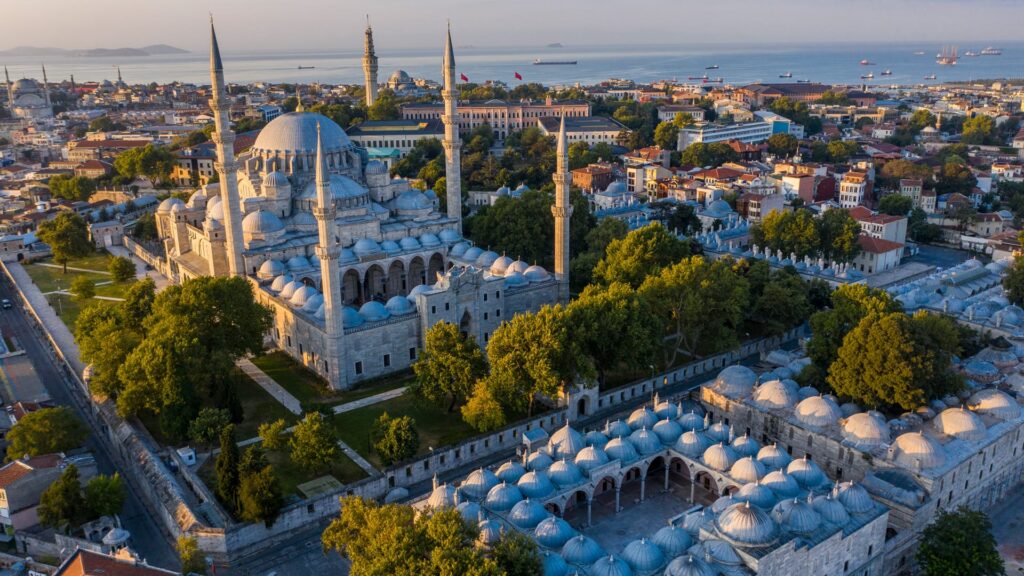
Approaching the mosque, you’ll see its four slender minarets and giant central dome flanked by semi-domes, creating a balanced, pyramid-like silhouette that seems to ascend to the heavens.

Inside, the space is breathtaking in its simplicity and harmony. Unlike the riot of color in the Blue Mosque, Süleymaniye favors a calm, dignified palette:

  • Central Dome: 27.5 meters in diameter, soaring to 53 meters high. Ingeniously supported by semi-domes and buttresses hidden in the walls.

  • Light and Air: 200+ stained-glass windows filter soft light into the prayer hall, giving it an airy, meditative atmosphere.

  • Calligraphy: Exquisite Quranic verses by the master calligrapher Hasan Çelebi.

  • Materials: Marble, Iznik tiles in restrained patterns, and finely carved woodwork.

It’s the kind of space that makes you stop talking and just look.


🕌 The Külliye: More Than a Mosque

Süleymaniye wasn’t designed as just a place of prayer—it was an entire social complex (külliye) meant to serve the city’s needs.

In its time, it included:

  • Hospitals

  • Madrasas (schools)

  • A public kitchen feeding the poor

  • A hammam (Turkish bath)

  • Shops whose rent funded maintenance

This idea of building for the community’s welfare was central to Ottoman urban design. Even today, you can see remnants of these facilities around the mosque, giving you a sense of how Istanbul once worked.


👑 The Tombs of Suleiman and Hürrem

One of the most moving spots in the complex is the cemetery behind the mosque. Here lie Sultan Suleiman the Magnificent and his legendary wife, Hürrem Sultan (Roxelana), in beautifully decorated mausoleums.

Suleiman’s tomb features striking İznik tilework and intricate calligraphy—a resting place befitting the empire’s most famous sultan. Visiting these tombs is a reminder of the very human stories behind grand historical events.


🌇 Views That Take Your Breath Away

One of Süleymaniye’s underrated features is its view. Situated atop Istanbul’s Third Hill, it offers an unmatched panorama over the Golden Horn, Bosphorus, and the Asian side.

Many visitors come just for the view, lingering on the terrace or at nearby traditional tea houses. Watching the city sprawl beneath you while sipping Turkish tea is a perfect Istanbul moment.


📸 Insider Travel Tips

✔️ Best time to visit: Late afternoon for stunning light, or early morning for quiet contemplation.
✔️ Dress code: Modest clothing required. Scarves are usually available at the entrance for women.
✔️ Entry fee: Free—donations welcome.
✔️ Time needed: At least 1 hour to appreciate the mosque and grounds.
✔️ Photography: Allowed (no flash inside). Be respectful of people praying.
✔️ Combine with: A stroll through nearby university quarters or a visit to the bustling streets around the Grand Bazaar.


❤️ Why You’ll Love It

Süleymaniye isn’t the busiest or flashiest mosque in Istanbul—that’s part of its charm. It feels peaceful, contemplative, and dignified, a true reflection of Ottoman ideals of beauty and balance.

You’re not just looking at a monument but stepping into the vision of a sultan and his architect who wanted to shape the city’s skyline—and soul—for centuries to come.

Spice Bazaar (Mısır Çarşısı): The Fragrant Heart of Istanbul

Spice Bazaar Istanbul travel guide • Mısır Çarşısı shopping tips • Best things to do in Istanbul Historic Peninsula


Introduction
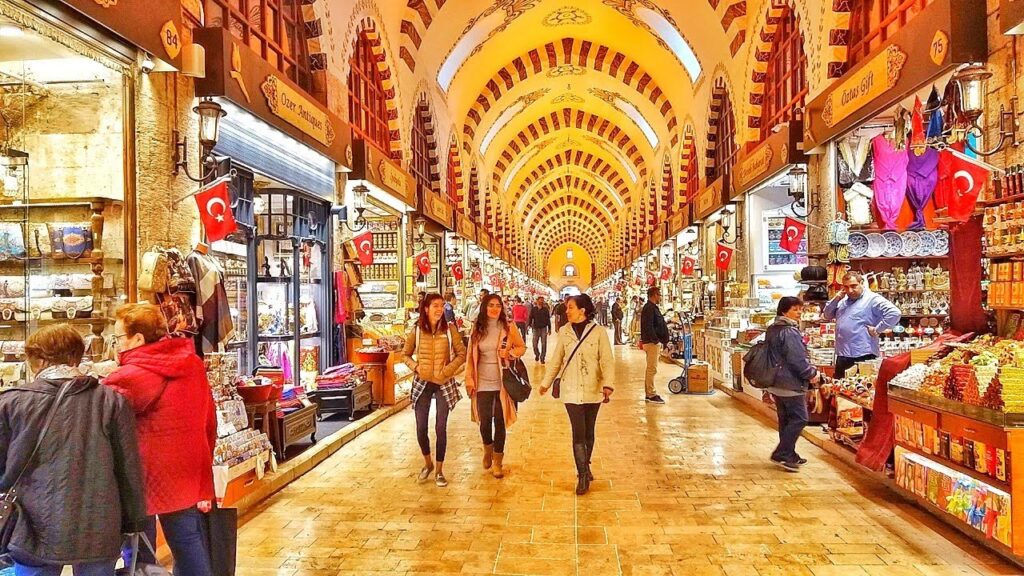
If there’s one place in Istanbul guaranteed to delight your senses, it’s the Spice Bazaar (Mısır Çarşısı). Step inside and you’ll be greeted by a kaleidoscope of colors, the sweet and spicy perfume of exotic herbs, the chatter of vendors calling out prices in multiple languages, and the dazzling sight of pyramids of sweets and nuts.

This isn’t just a market. It’s a centuries-old trading hub that still feels wonderfully alive. Let’s dive into its history, what to buy, and how to make the most of your visit.


🌟 A Historic Marketplace with Global Roots

Built in the 1660s as part of the grand Yeni Camii (New Mosque) complex, the Spice Bazaar got its name from the goods once shipped here from Egypt (then an Ottoman province).

Back then, Istanbul was the nerve center of East–West trade. Spices, teas, dried fruits, textiles, and medicinal herbs arrived from India, Persia, Arabia, and North Africa—many passing through Egypt first. The market was actually funded by taxes from these Egyptian provinces, hence its Turkish name: Mısır Çarşısı (“Egyptian Market”).

For Ottoman Istanbul, the bazaar wasn’t just for food—it was essential. Spices weren’t only about taste but also medicine, preservation, and even status.

Even today, despite modern grocery stores, Istanbulites still flock here for quality ingredients and tradition.


🏛️ An Architectural Gem

The bazaar itself is stunning. Shaped like an L, it has two main corridors lined with around 85 shops beneath high vaulted ceilings decorated with Ottoman-era motifs.

Natural light filters through small windows, bouncing off polished brass scoops and vibrant displays of goods. The long, slightly dim corridors preserve a sense of mystery and history—you’re walking in the footsteps of traders, chefs, and herbalists from centuries ago.

Don’t miss:

  • The ornate entrances: Especially the main gate facing Eminönü Square.

  • Yeni Camii next door: An architectural jewel that’s part of the same complex.

  • The side streets: Spilling over with stalls selling kitchenware, baskets, and even pets!


🍯 What to Buy (and Taste!)

This isn’t your average market. Even locals come here for the best quality. Here’s what to look for:

  • Spices: Saffron, sumac, pul biber (Turkish chili flakes), cumin, cinnamon sticks. Vendors often let you smell or sample.

  • Teas: Apple tea, rose tea, herbal blends—often presented in big colorful bins.

  • Turkish Delight (Lokum): From classic rose to pistachio-studded varieties. Many shops offer free samples.

  • Dried Fruits & Nuts: Apricots, figs, almonds, walnuts. Often cheaper (and better quality) than supermarkets.

  • Honey and Jams: Including specialty varieties like pine honey.

  • Herbal Remedies: From digestion aids to natural beauty products.

  • Sweets: Baklava, helva, and other Turkish pastries.

Part of the fun is chatting with vendors. Don’t be shy—they’re used to questions and often love explaining their products.


🧭 Beyond the Main Hall

While the central Spice Bazaar is the star, the surrounding area is equally rewarding. Wander the labyrinth of narrow streets around Eminönü and you’ll find:

  • Rustem Pasha Mosque: A hidden gem famous for its blue İznik tiles.

  • Mahmutpaşa Bazaar: For textiles, scarves, and cheap clothes.

  • Tahtakale: Istanbul’s old-school hardware and household goods market.

It’s all part of the same trading culture that made this city the “marketplace of the world.”


📸 Insider Travel Tips

✔️ Best time to visit: Morning for fewer crowds; late afternoon for a lively local vibe.
✔️ Haggling: Expected! Prices are rarely fixed—start low and smile.
✔️ Samples: Most vendors happily offer tastes of lokum or nuts.
✔️ Payment: Many shops take credit cards, but cash can help you negotiate better deals.
✔️ Accessibility: Generally flat but crowded; watch your step on polished floors.
✔️ Combine with: A visit to Yeni Camii next door or a ferry ride from Eminönü Pier.


❤️ Why You’ll Love It

The Spice Bazaar isn’t just a place to buy things—it’s a theater of life. You’ll hear a dozen languages in the span of a few steps, see deals struck with a handshake, and smell fragrances that have traveled continents.

It’s the Istanbul of traders and travelers, a reminder that this city has always been a meeting point between worlds. Even if you don’t buy a thing, you’ll walk away with memories that are priceless.

Grand Bazaar (Kapalıçarşı): The Timeless Labyrinth of Shopping

Grand Bazaar Istanbul travel guide • Kapalıçarşı shopping tips • Best things to do in Istanbul Historic Peninsula


Introduction
If you’re dreaming of an Istanbul straight out of the Arabian Nights—lantern-lit arcades, carpets in every hue, the scent of leather and spices—look no further than the Grand Bazaar (Kapalıçarşı).

One of the world’s largest and oldest covered markets, it’s not just a place to shop. It’s a living piece of history, a social hub, and a cultural experience that dazzles every sense. Let’s get lost (in the best way) in its endless corridors!


🌟 A Rich History of Trade and Culture

The Grand Bazaar’s story begins in 1461 when Sultan Mehmed II, the Conqueror, ordered its construction shortly after the Ottoman conquest of Constantinople.

Originally designed to boost the city’s economic revival, the Bazaar quickly became one of the world’s most important trading centers. At its peak in the 16th and 17th centuries, it was the place for merchants from Europe, Asia, Africa, and the Middle East to meet, barter, and sell.

Travelers from Venice to Cairo described it as a wonder of the world. Goods from every corner of the empire—and beyond—poured in: silks from Persia, spices from India, jewels from Anatolia, and even exotic animals.

Through fires, earthquakes, and restorations, the Grand Bazaar has survived and evolved. Today, it remains a beating heart of Istanbul commerce.


🏛️ A Labyrinth of Shops and Streets

Step inside, and you’ll find a city within a city. The Grand Bazaar covers over 30,000 square meters, with:

  • Around 60 covered streets

  • Over 4,000 shops

  • 22 gates

  • Numerous fountains, mosques, and even two historic bedestens (vaulted market halls) at its core.

These aren’t sterile modern shopping malls. The Bazaar’s lanes are organized by traditional guilds:

  • Jewelers’ Street (Kalpakçılar Caddesi): Glittering with gold, silver, and gems.

  • Carpet Sellers: Handwoven masterpieces in every color and style.

  • Leather Goods: Jackets, bags, and accessories.

  • Antiques and Curios: Ottoman-era treasures, calligraphy, and vintage maps.

  • Ceramics and Lamps: Colorful hand-painted designs and intricate mosaics.

Even if you don’t buy a thing, simply wandering is an adventure.


🧭 Atmosphere: More Than Shopping

What really makes the Grand Bazaar special isn’t just the goods for sale—it’s the experience.

Friendly shopkeepers call out “Where are you from?” in a dozen languages. Tea is offered freely during negotiations. Hagglers haggle with flair and humor.

The low, vaulted ceilings and lantern-lit passageways transport you centuries back. Everywhere you look, patterns, colors, and textures compete for your attention.

In the middle of the chaos, you can find quiet corners too: historic fountains trickling in shaded courtyards, small mosques where shopkeepers pause to pray, and cozy cafes to rest your feet with a strong Turkish coffee.


📸 Insider Travel Tips

✔️ Bargain, Bargain, Bargain: Haggling isn’t rude—it’s expected! Start low, smile often, and enjoy the process.
✔️ Time: Don’t rush. Give yourself at least 2 hours to wander.
✔️ Opening hours: Typically 9 AM–7 PM, closed on Sundays.
✔️ Accessibility: Some areas can be uneven or crowded; take your time.
✔️ Best time to visit: Mornings are quieter; afternoons busier but more atmospheric.
✔️ Payment: Many shops accept cards, but cash (Turkish Lira) can get better deals.


❤️ Why You’ll Love It

The Grand Bazaar isn’t just a market—it’s Istanbul in microcosm. Bustling yet welcoming, ancient yet alive, chaotic yet somehow beautifully ordered.

You don’t just buy a carpet here—you hear its story. You don’t just sip tea—you make a friend. You don’t just shop—you time travel.

For many visitors, this is where they truly feel Istanbul’s soul.

Hippodrome (Sultanahmet Square): The Ancient Heart of Constantinople

Hippodrome Istanbul travel guide • Sultanahmet Square attractions • Things to do in Istanbul Historic Peninsula


Introduction
Imagine a roaring crowd of 100,000 people, cheering on thundering chariot races, chanting for their favorite teams, or even rioting against the emperor himself. Welcome to the Hippodrome of Constantinople—today known as Sultanahmet Square.

What seems like a calm, open plaza today was once the beating heart of Byzantine public life. It’s one of Istanbul’s most fascinating historical spaces, layered with monuments that tell stories of ancient empires, brutal rebellions, and cultural exchange. Let’s explore it together.


🌟 A History of Spectacle and Power

The Hippodrome was originally begun in the 3rd century CE under Emperor Septimius Severus but was dramatically expanded by Emperor Constantine the Great when he made Constantinople his new imperial capital in the 4th century.

It was more than just an arena. Think of it as the social media of its day—a place where politics, sport, religion, and popular culture all collided.

Chariot racing was the superstar entertainment of the time. Fans were fiercely loyal to their factions—the Blues and the Greens—and their rivalry wasn’t always friendly. The most notorious moment was the Nika Revolt of 532, when racing crowds turned into a rebellious mob that nearly overthrew Emperor Justinian.

Over the centuries, the Hippodrome witnessed triumphal parades, coronations, and diplomatic ceremonies. Even after the Ottoman conquest in 1453, the space remained important—though the races ended, the Ottomans used the square for festivals and gatherings.


🏛️ Surviving Monuments: Ancient Art in the Open Air

While the grand stands and imperial box (Kathisma) are long gone, the Hippodrome retains several spectacular monuments in situ. Walking through the square today is like visiting an open-air museum:

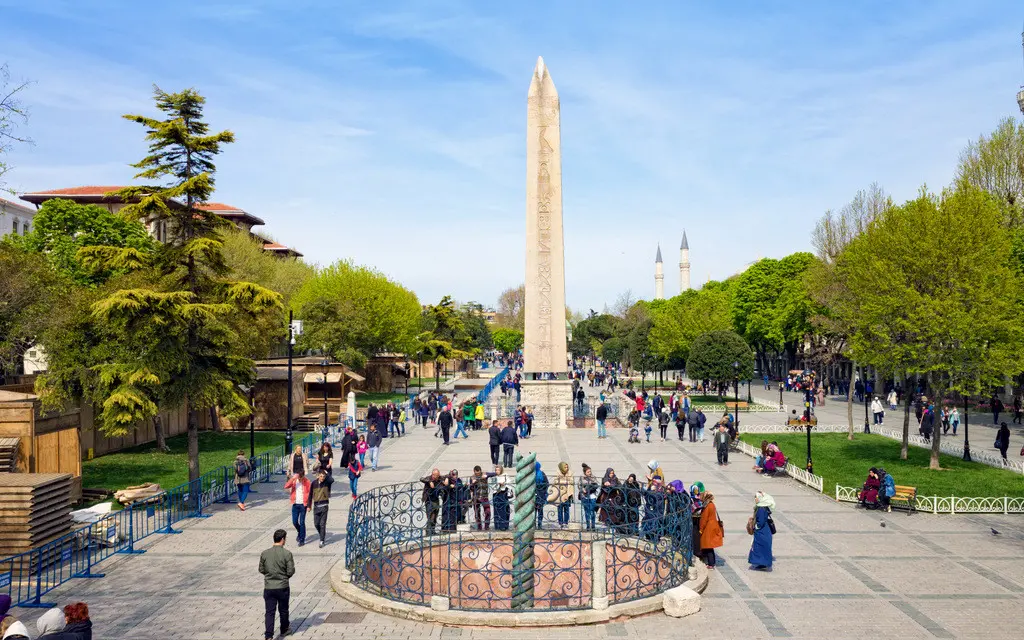
  • Egyptian Obelisk: Originally erected in Luxor by Pharaoh Thutmose III (~1500 BCE), this pink granite monument was brought to Constantinople in the 4th century. The Romans cut it into pieces for transport and reassembled it here. Look for the intricate reliefs on its marble base showing Emperor Theodosius watching chariot races.

  • Serpent Column: Even older, this twisted bronze column came from Delphi, Greece. Originally part of a giant sacrificial tripod dedicated to Apollo after the Greek victory over the Persians in 479 BCE. Its serpent heads were lost over time (one is in the Istanbul Archaeology Museum).

  • Walled Obelisk: Built of rough masonry in the 10th century under Emperor Constantine VII. Though less flashy, it’s impressive for its size and historic role as the central spine of the racing track.

  • German Fountain: A later addition from 1900, gifted by Kaiser Wilhelm II. Its green dome and neo-Byzantine style are beautiful, and it symbolizes the late Ottoman-German friendship.


🧭 Walking Through History

Today’s Sultanahmet Square is a peaceful, pedestrian-friendly plaza where you can literally walk the old Hippodrome track. It’s surreal to think you’re standing where emperors, gladiators, and racers once performed for the roaring masses.

Stroll slowly and read the plaques, or just sit on a bench watching Istanbul life go by, from street vendors selling roasted chestnuts to kids chasing pigeons. The vibe is friendly, relaxed, and perfect for people-watching.


📸 Insider Travel Tips

✔️ Best time to visit: Early morning for photos without crowds, or evening for cooler weather and street life.
✔️ Cost: Free! It’s an open public space.
✔️ Accessibility: Fully walkable and accessible, though cobblestones can be uneven.
✔️ Nearby sights: Ayasofya, Blue Mosque, Basilica Cistern—all literally steps away.
✔️ Photography: The monuments look beautiful at dawn and dusk. Don’t miss detailed shots of the Obelisk reliefs.


❤️ Why You’ll Love It

The Hippodrome isn’t a building you can enter—it’s a space you feel. It’s one of those places where Istanbul’s layers really hit you: an ancient Roman stadium that became a Byzantine showpiece, then an Ottoman ceremonial square, and now a public park shared by tourists and locals alike.

If you want to stand somewhere and just feel history swirling around you, this is it.